Until my internship at Valorganics, I judged a reaction the way school had taught me to: did it work? If the precipitate formed, the colour changed and the melting point roughly matched the textbook, the experiment was a success. The plant floor asked a different set of questions, and it took me three technical reports to learn to ask them myself.
A powder that was the wrong colour
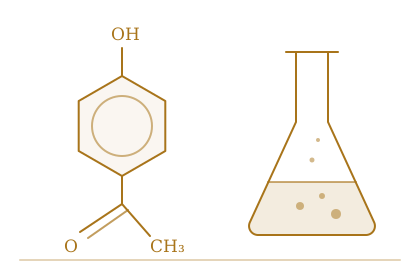
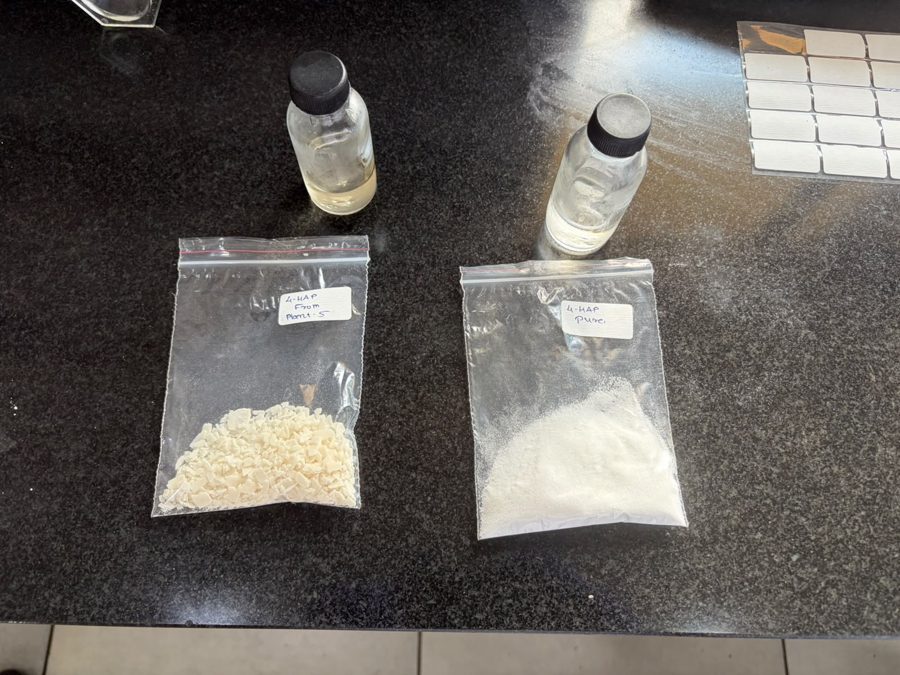
The first material I studied was 4-hydroxyacetophenone, usually shortened to 4-HAP. It is a small aromatic ketone with a phenol group, used in one industrial route to paracetamol and in cosmetic formulations. The batch from the plant came out as cream-coloured flakes. Chemically, it was mostly what it was meant to be. Commercially, it was a problem, because buyers specify colour. A cream tint signals traces of oxidation and condensation products, and a company making a medicine or a skin cream does not want them.
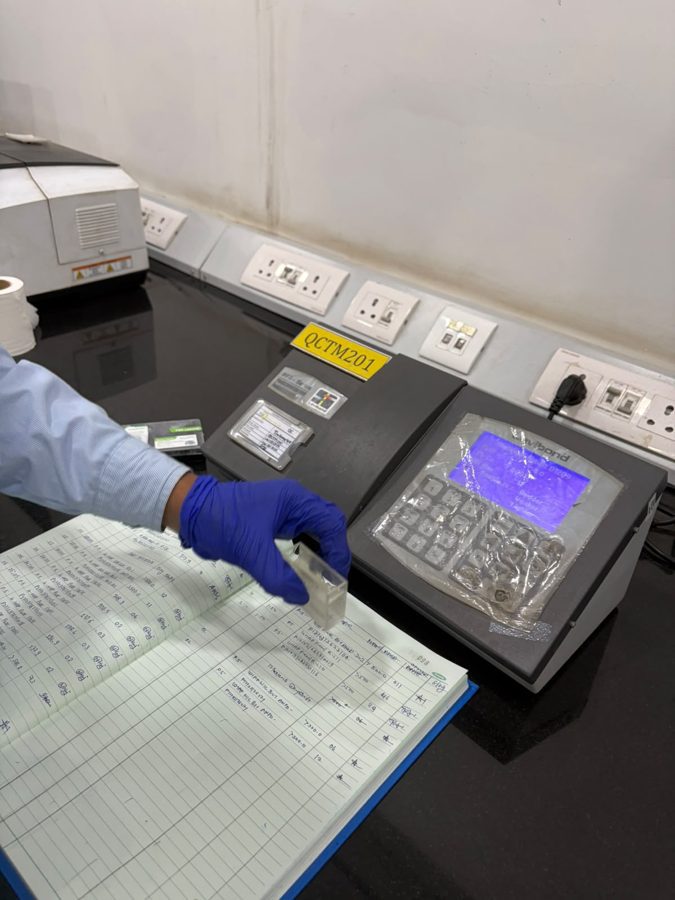
In industry, colour is measured rather than described. We used the APHA, or platinum–cobalt, scale (ASTM D1209) on a Lovibond PFX-i colorimeter, where a lower number means a paler sample. The crude flake read 204.8.
Same colour, very different yield
Recrystallisation is a simple idea. You dissolve the crude solid in a minimum of warm solvent, filter off anything that will not dissolve, and cool the solution so the product crystallises while most of the impurities stay behind in the liquid. I documented two versions of it, each on a 200 g batch.
The first used ethyl acetate with a little ethanol. It worked on colour: the APHA value fell to 51.8, a drop of almost 75%. But once the crystals were dried, only 69 g came back from the 200 g that went in, about 34.5%.
The second used methanol and water in a 1 : 3 ratio by mass. It reached the same colour, 51.8, without any activated charcoal, and returned 170 g of white crystalline product, an 85% yield.
In a school laboratory both would count as successes, because both purified the compound. On a plant that makes this material by the tonne, losing two thirds of the product to meet a specification is an expensive way of throwing product away. That comparison changed how I read any procedure. I now ask what it costs to make a reaction work, in material, energy and waste.
Reading a route backwards
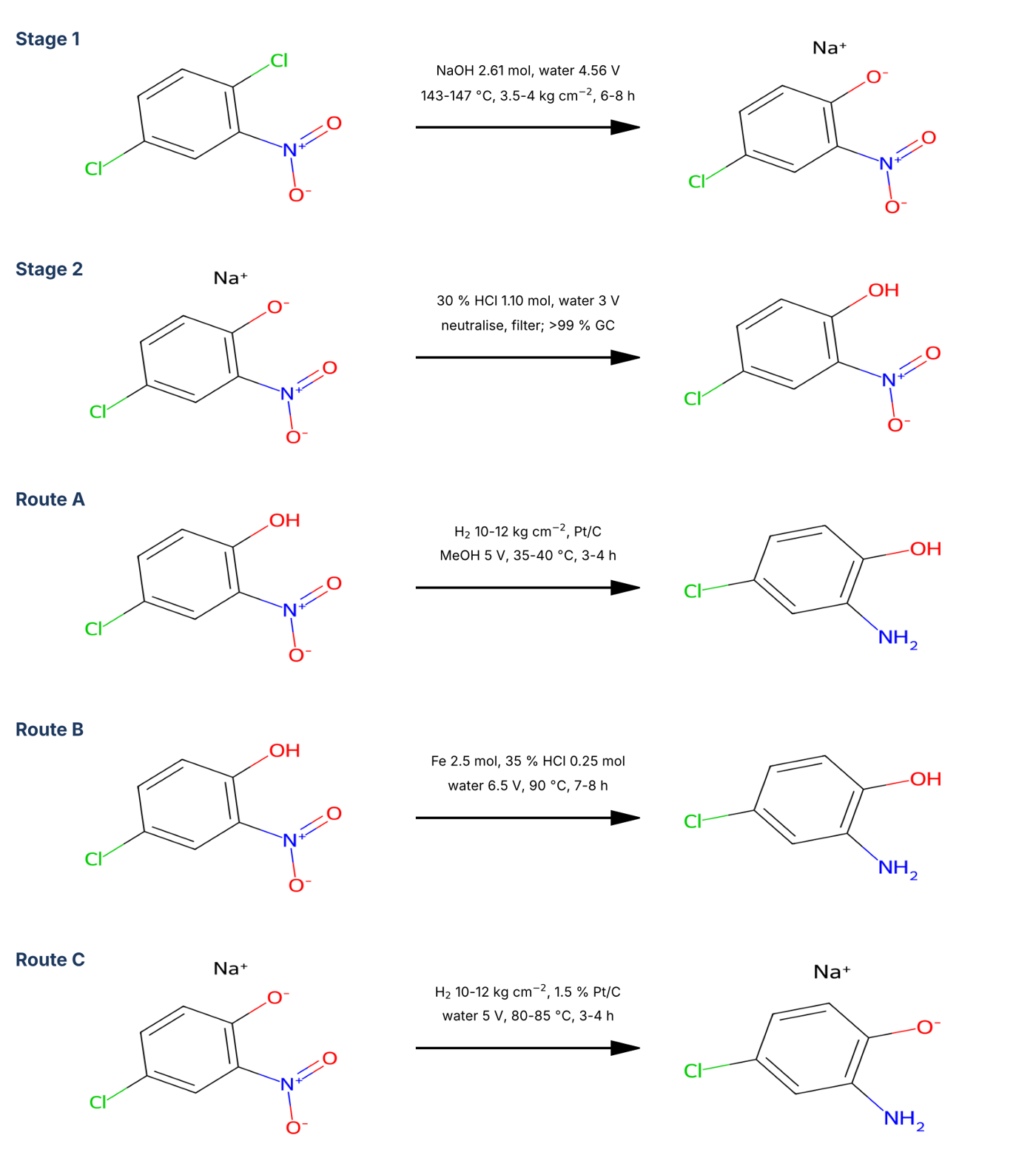
The third report was about a synthesis: making 4-chloro-2-aminophenol from 1,4-dichloro-2-nitrobenzene. The starting material carries two chlorine atoms, yet hydroxide replaces only one of them. Working out why took me back to the mechanism. The chlorine next to the nitro group is activated, because the negative charge of the intermediate can spread onto the nitro oxygens. The chlorine on the other side gets no such help, so the substitution runs cleanly at one position.
The nitro group is then reduced to an amine, and the plant had three ways of doing it: hydrogen over a platinum catalyst in methanol, iron with hydrochloric acid, or hydrogenating the sodium salt directly in water. On paper all three give 80–82% yield at more than 99% purity. Choosing between them comes down to solvents that must be recovered, iron sludge that must be disposed of, and steps that can be skipped.
Saying what you did not measure
The lesson I did not expect was about honesty. The figures for the 4-chloro-2-aminophenol route came from the plant's flow sheet, not from a batch I had weighed and assayed myself. The report says so plainly on its first page, and every yield in it is labelled as a quoted figure. My purification reports end with a list of what I had not yet done: an HPLC assay, a melting point, a Karl Fischer water measurement, and repeat batches to check that the numbers hold.
That habit has carried into everything else I write. A result is only as good as the account of where it came from.